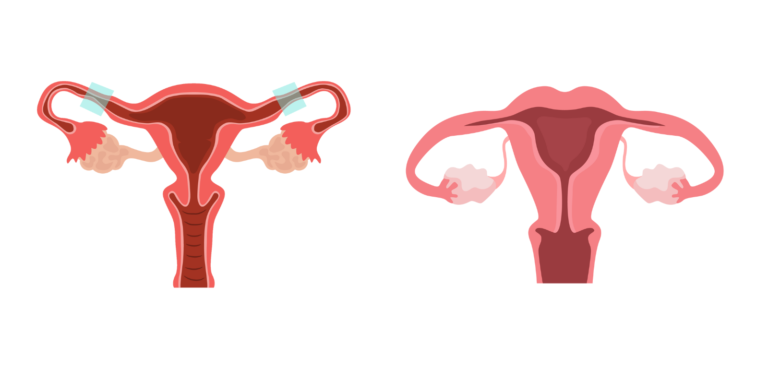

Taking the step to get permanently sterile is serious and requires both partners to make the decision together as a couple. There are hundreds of families in India that have to make this choice as they approach the end of their family planning. There are a couple of different surgical options that provide patients with a vasectomy and tubectomy. These two procedures are designed to achieve the same goals of preventing pregnancies in the future; however, their methods, recovery, and bodily impacts are all distinct.

This profound guide takes an in-depth examination to explain the differences between vasectomy and tubectomy in the most intellectually simplified format possible. The guide will provide the definitions, procedure overviews, benefits, disadvantages, and expectations of recovery for both.
Vasectomy: A Simple and Safe Procedure for Men
In order to examine and comprehend the vasectomy tubectomy difference, we will start with the fundamentals.
A vasectomy is a medical procedure done on men to obtain permanent contraception. It is considered a minor surgery, and it involves cutting and/or blocking the vas deferens, the tubes through which sperm travel from the testicles.
How Vasectomy Works
After the vas deferens are blocked, the sperm are not able to mix with the semen. A man can continue to ejaculate the same amount of fluid as before, but the semen is devoid of sperm. This prevents pregnancies.
Key Highlights
- There are no negative consequences on sexual performance or sexual ability.
- There are no negative consequences on sexual desire, erections, or ejaculation.
- The whole procedure can take from 15 to 30 minutes.
One of the most efficient and safest of the male sterilisation techniques is the vasectomy.
Define Tubectomy: A Permanent Contraceptive for Women
A tubectomy is a medical procedure done on women, which is a surgical sterilisation procedure. It is the cutting, tying, or sealing of the fallopian tubes that prevents the eggs from getting to the sperm.
How Tubectomy Works
Fallopian tubes are blocked or damaged in a deliberate manner. This stops the possibility of fertilisation and is a permanent form of birth control.
Key Highlights
- Menstrual cycles are not impacted in any way.
- Sexual desire is not impacted, which means the ability to participate in sexual intercourse is not impacted.
- The procedure is often done after having a child or as a scheduled surgery.
A highly trusted female sterilisation procedure in India is tubectomy.
Vasectomy vs Tubectomy: Understanding The Surgical Approach
Let’s look at the difference between vasectomy and tubectomy in terms of the procedure performed.
Vasectomy Procedure
- Local anaesthesia is typically used.
- There is a small incision or a small puncture made in the scrotum.
- Most of the newer methods do not require any stitches (No-Scalpel Vasectomy).
- The procedure takes very little time and involves very little discomfort.
Tubectomy Procedure
- Local or general anaesthesia is used.
- Several different methods can be used:
- Mini-laparotomy
- Laparoscopy
- Involves going through the abdomen to gain access to the fallopian tubes
- There is a longer recovery time, and stitches are needed.
Thus, it won’t be wrong to say that the tubectomy is much more invasive than the vasectomy, takes a longer time and is a lot more complicated.
Compare Recovery: Another Key Difference Between Vasectomy and Tubectomy
Recovery times are different for vasectomy and tubectomy.
Vasectomy Recovery
- Most men are able to resume their normal daily activities in 1-2 days.
- There can be a little bit of pain or mild swelling, but that goes away pretty quickly.
- You can begin having sexual intercourse after about a week.
- It can take about 8-12 weeks to clear the sperm, so just remember that full effectiveness will take a little time.
Tubectomy Recovery
- 1-2 weeks of recovery is normal, but that can be highly dependent on the method used.
- The body needs more time to heal from abdominal incisions.
- Some discomfort, bloating, or fatigue may occur.
- Effectiveness is immediate, but doctors may still recommend caution.
Vasectomy clearly offers quicker and easier recovery.
Safety Comparison: Vasectomy and Tubectomy Differences in Risk Levels
Both procedures are safe, but the level of invasiveness differs.
Risks of Vasectomy
- Mild pain or bruising
- Infection (rare)
- Recanalisation (very rare)
- Short-term discomfort
Risks of Tubectomy
- General anaesthesia risks
- Internal bleeding
- Infection
- Longer healing time
- Ectopic pregnancy (very rare but more common than men’s complications)
Because vasectomy is less invasive, it naturally has fewer risks.
Effectiveness: Vasectomy vs Tubectomy
Both methods are highly effective for permanent contraception.
Vasectomy Effectiveness
- 99% effective after sperm clearance.
- Very low failure rate.
Tubectomy Effectiveness
- 99% effective immediately.
- A slight chance of tube reconnection over the long term.
Both are reliable, but a vasectomy is slightly easier to perform and manage.
Cost Differences: Vasectomy and Tubectomy in India
The cost factor is important for many Indian families.
Vasectomy Cost
- Usually lower than tubectomy.
- Cost-effective as procedures are performed minimally invasively.
- Over accessibility from both private and public health institutions.
Costs of Tubectomy
- Costs are greater due to added costs from anaesthesia, surgery, and bed occupancy.
- In many institutions, it is provided at cheaper costs postpartum as it is included in the delivery procedures.
From a price perspective, vasectomies are cheaper for the couple.
Social Perception in India: Why Is Tubectomy More Common?
Vasectomy has lower costs and is less complex, yet in India, tubectomy is more prevalent due to:
- Ignorance
- Assumptions about the male partner’s sexual function
- Women are the majority in family planning
- Societal norms
Nonetheless, due to the advancement in education and counselling, there is a trend in more vasectomies for the Indian couple.
Differences Between Vasectomy and Tubectomy
| Feature | Vasectomy | Tubectomy |
|---|---|---|
| Who undergoes it? | Men | Women |
| Goal | Block sperm flow | Block the egg pathway |
| Invasiveness | Very low | Moderate |
| Anesthesia | Local | Local/General |
| Recovery | 1–2 days | 1–2 weeks |
| Effect on hormones | None | None |
| Sexual function | Unaffected | Unaffected |
| Cost | Lower | Higher |
This table makes the difference between vasectomy and tubectomy clear at a glance.
Pros and Cons of Vasectomy
Pros
- Speedy and sound
- Little discomfort
- Affordable
- Quicker upturn
- Highly efficient
Cons
- Irreversible
- There is post-procedure sperm testing
- Uncommon ineffectiveness
Pros and Cons of Tubectomy
Pros
- Works right away
- Does not affect your hormones or your menstrual cycle
- Provides long-term prevention of pregnancy
Cons
- Anaesthesia is necessary
- Greater chance of complications
- Requires more time to heal
- More expensive
Who Should Choose a Vasectomy?
Best for:
- Men who are certain they are done having children
- Couples who desire a safer and easier procedure
- Families who are looking more on the budget side
Who Should Choose Tubectomy?
Best suited for:
- Women who want to take the lead
- Procedure done at the same time as childbirth (C-section or after delivery)
- Cultural considerations are significant
Why Choose Zeeva Fertility?
Zeeva Fertility is well-known for its reproductive and family-planning services in India. Here is why they chose us:
- We provide counselling about what a vasectomy and a tubectomy are, their effects and future alternatives.
- Our doctors share every detail, from what is tubectomy and what is vasectomy? to every aspect with compassion and patience.
- We use modern surgical techniques that are minimally invasive and safer for everyone.
- We provide individualised attention and care before, during, and after the intervention.
- We are dedicated to being reliable, ethical, and high-quality in the reproductive healthcare sector.
Zeeva Fertility guarantees transparency, protection, and, with no doubt, closure about your permanent contraception.
Final Thoughts: Choosing the Right Option
Both vasectomy and tubectomy are great for long-term contraception. However, vasectomy is:
- More safe
- Less complicated
- More affordable
- Fewer surgical procedures
Decide considering medical guidance and comfort after properly discussing the matter as a couple.
Frequently Asked Questions
Q1. Is a vasectomy more effective than a tubectomy?
Both procedures are more than 99% effective. However, vasectomy has a slightly lower failure rate because it is simpler and less invasive. Tubectomy has a small chance of ectopic pregnancy if failure occurs, while vasectomy failures are extremely rare.
Q2. How long does it take to return to normal life after vasectomy or tubectomy?
Recovery after a vasectomy is very quick, usually 1–2 days. Most men resume work within 24–48 hours. Tubectomy requires more healing time due to abdominal incisions, so women typically need 7–14 days to return to normal activities.
Q3. Will vasectomy or tubectomy affect sexual desire or performance?
No. Neither procedure affects sexual drive, hormones, periods, erections, or pleasure. Both methods only block the reproductive pathways and do not interfere with sexual function.
Q4. Can a vasectomy or a tubectomy be reversed?
Both are considered permanent, but reversal is possible in some cases. Vasectomy reversal has a higher success rate than tubectomy reversal. However, reversals are expensive, complex, and not always guaranteed to restore fertility.
Q5. Which procedure is safer: vasectomy or tubectomy?
Vasectomy is safer because it is less invasive, requires only local anaesthesia, and carries fewer complications. Tubectomy involves abdominal surgery, which increases anaesthesia risks and recovery time. For most couples, vasectomy is the medically safer choice.