
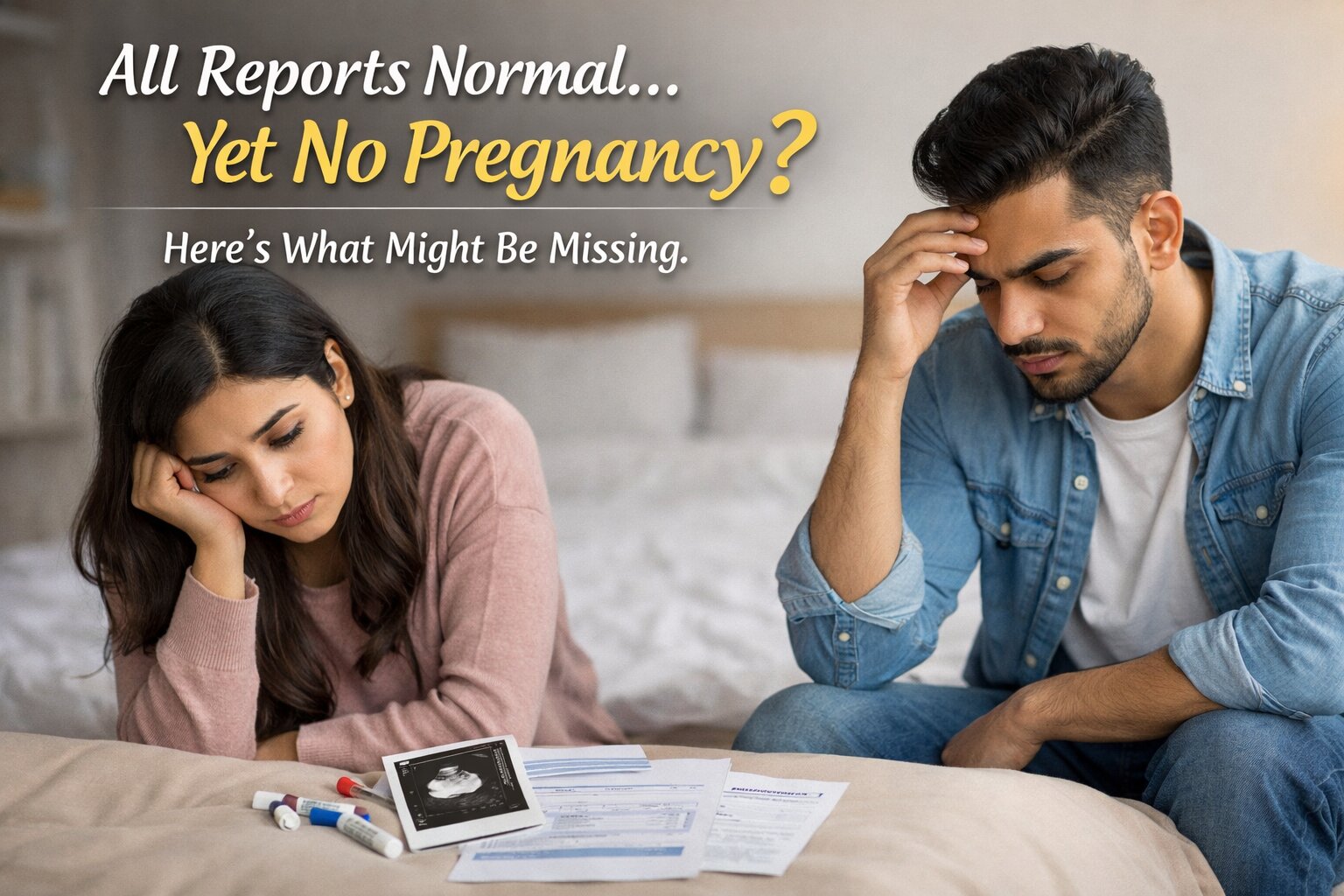
Riya and Aman had done everything right.
They got married at the “right” age, focused on their careers, and when they finally decided they were ready for a baby, they were excited, hopeful, and patient.
Months passed.
Then a year.
When nothing happened, they did what most couples do—they went for tests.
Blood tests, scans, semen analysis—everything.
And the result?
“All your reports are normal.”
At first, it felt like good news. But as time went on, it became the most frustrating sentence they had ever heard.
“If everything is normal… then what’s wrong?” Riya asked during their visit to Zeeva Fertility.
That’s when the real conversation began.
When “Normal” Doesn’t Mean “Simple”
As a fertility specialist, this is one of the most common situations we see.
Couples walk in with a file full of reports—each stamped normal—but with no pregnancy to show for it.
The truth is, fertility is not a single test result—it’s a chain of events.
Ovulation, fertilization, embryo development, implantation—each step must happen perfectly. And sometimes, even when everything looks normal, something subtle is not working as it should.
This condition is called Unexplained Infertility.
And yes, it’s real.
Riya’s Question: “Am I Ovulating Properly?”
Riya’s cycles were regular. Her reports confirmed ovulation.
But we explained something many people don’t realize:
Ovulation doesn’t always guarantee egg quality.
As women age—even in their late 20s and early 30s—egg quality can vary. The egg may be released, but it may not always be capable of forming a healthy embryo.
This isn’t something routine tests can easily detect.
Riya was surprised. “So everything can look fine, but still not work?”
Exactly.
Aman’s Concern: “My Reports Are Normal Too”
Aman’s semen analysis showed normal count and motility.
But we went a step further, since basic tests don’t always reveal issues like DNA damage of sperm or functional inefficiencies, if any.
We explained that sometimes, sperm may reach the egg but fail to fertilize it properly—or result in an embryo that doesn’t grow.
This was new information for both of them.

The Missing Step: What Happens After Fertilization?
One of the biggest gaps in basic fertility testing is what happens after fertilization.
Even if sperm and egg meet, the embryo must:
- Develop properly
- Travel to the uterus
- Implant into the uterine lining
A small issue at any of these stages can prevent pregnancy.
In Riya’s case, we suspected a possible implantation issue—something that wouldn’t show clearly in routine scans.
Timing: The Most Overlooked Factor
When we discussed their routine, another detail emerged.
They were trying—but not always during the most fertile window.
Many couples aren’t aware that the fertile window is just 4–5 days in a cycle.
Missing this window repeatedly can delay pregnancy, even when everything else is normal.
Sometimes, it’s not a medical issue—it’s simply about precision.
The Emotional Side No One Talks About
At one point, Riya said something that stayed with us:
“I think this is harder than hearing something is wrong… because we don’t even know what to fix.”
That’s the reality of unexplained infertility.
No clear problem.
No clear answer.
Just growing frustration.
Aman added, “Everyone keeps saying relax… but how?”
This emotional burden is often as significant as the medical challenge.
What was the turning point?
At Zeeva Fertility, we turned around their approach from guessing to guided treatment.
1. Cycle Monitoring & Timed Intercourse
We tracked ovulation closely and guided them on the exact fertile window.
2. Lifestyle Corrections
Small but impactful changes:
- Better sleep
- Reduced stress
- Nutritional support
3. Moving to IUI
After a few cycles, we recommended IUI (Intrauterine Insemination) to improve the chances of fertilization by placing the best quality sperm closer to the egg.
4. Considering IVF (If Needed)
We explained IVF not just as a treatment, but also as a diagnostic tool:
- It shows whether fertilization is happening
- Helps observe embryo quality
- Improves implantation chances
What Happened Next?
A few months into guided treatment, Riya walked into the clinic with a different expression.
This time, she wasn’t anxious.
She was smiling.
Her pregnancy test was positive.
What Their Story Teaches Us
Riya and Aman’s journey is not unusual.
If you’ve been told “everything is normal” but are still not conceiving, it doesn’t mean:
- You’re overthinking
- You’re doing something wrong
- There is no solution
It simply means: The answer hasn’t been found yet—but it can be.
When Should You See a Fertility Specialist?
Don’t wait endlessly if:
- You’ve been trying for 1 year (or 6 months if above 35)
- Reports are normal but pregnancy isn’t happening
- You feel confused about what to do next
The earlier you seek the right guidance, the better your chances.
Zeeva Fertility’s Promise
As a fertility clinic in Delhi, we value the emotions of people and upholds it. We understand that behind every report, lies a story of enormous hope and dreams. We go beyond “normal reports” to find meaningful answers through diagnosis, advanced techniques and compassionate care.
Because your journey deserves more than just “everything looks fine.
If you see yourself in Riya and Aman’s story, know this:
You are not alone.
And you are not without options.
All it takes is the right perspective coupled with right guidance, so as to turn confusion into clarity.






0 Comments
Join the conversation