

Many women suffer from painful and heavy menstrual cycles and do not understand what the underlying issues are. One of the most misunderstood involuntary contractions of the uterus, which has the potential to destroy the quality of life, is adenomyosis. Knowing what adenomyosis is and how it develops is crucial to getting adequate treatment and understanding the options available to you. Many people confuse adenomyosis with endometriosis, and endometriosis is defined as a disorder in which endometrial tissues grow into the muscle wall of the uterus.
What Does the Term Adenomyosis Mean?
Adenomyosis is a medical condition affecting women in their reproductive years. It is the growth of the tissue lining the uterus (the endometrium) into the muscular wall of the uterus (the myometrium). This abnormal tissue growth causes thickening, and the tissue bleeds during menstrual cycles, resulting in inflammation and pain in the affected area. Tissue derived from the endometrium, in simple terms, is referred to as the endometrial tissue inside the uterus. This condition creates a pathological state of uterine enlargement, and the pathological state of enlargement of the uterus is called adenomyosis.
Adenomyosis can affect uterine environment and implantation, which may influence IVF success rates, making early diagnosis and personalized treatment crucial for better outcomes.
The condition affects a considerable proportion of the female population, as studies indicate that there is a 20-35% occurrence of the condition. The occurrence is highest in the 35 to 50 age range. However, the condition is being increasingly diagnosed in the younger populations, as more advanced imaging techniques are being incorporated into that primary population.
What is going on inside the Adenomyosis Uterus?
What is normal in anatomy and abnormal in pathology, is the endometrial lining of the uterus normally shed during levels of the menstrual cycle, while in adenomyosis the uterus, some of this tissue undergoes a miotic embedding in the uterine muscle. The tissue also responds to the endocrine changes associated with the levels of the menstrual cycle. This causes the walls of the uterus to thicken. This also causes the endometrial lining to get inflamed, making the uterus larger, and causing painful and heavy periods. It becomes enlarged. This is traditionally used to describe the condition as a bulky uterus with adenomyosis.
Adenomyosis Causes: Why Does It Happen?
Research on adenomyosis causes is still being developed, however, there are multiple theories backed by relevant literature:
- Aggressive tissue growth: The endometrial cells invade the muscle of the uterus after childbirth or after having a uterine surgery
- The role of hormones: Estrogen is a significant component of the aggravation of this condition.
- Post-uterine trauma inflammation: Abnormal tissue growth may result from a C-section or from a curettage.
- Genetic Development: Some women may present with misplaced endometrial tissue from birth.
Chronic Estrogen exposure, uterine surgeries, and multiple pregnancies are risk factors.
Adenomyosis Symptoms You Should Know
Adenomyosis symptoms affect people differently, with some being asymptomatic while others experience extreme pain.
The symptoms include the following:
- More than normal bleeding or heavy bleeding during a woman’s period
- Cramps (dysmenorrhea) that are painful and excessive
- Chronic pain of the pelvis
- The pain of sexual intercourse
- Periods that include blood clots
- The abdomen may feel pressure or may be bloated
In the advanced stages of the disease, the symptoms can be so severe that they affect a woman’s daily activities and her ability to get pregnant.
Bulky Uterus with Adenomyosis: What Does It Mean?
A bulky uterus with adenomyosis is a medical condition in which a woman’s uterus is increased in size due to the thick muscle walls of the uterus. Fibroids are different from this condition because the uterine enlargement is usually not nodular, but rather uniform.
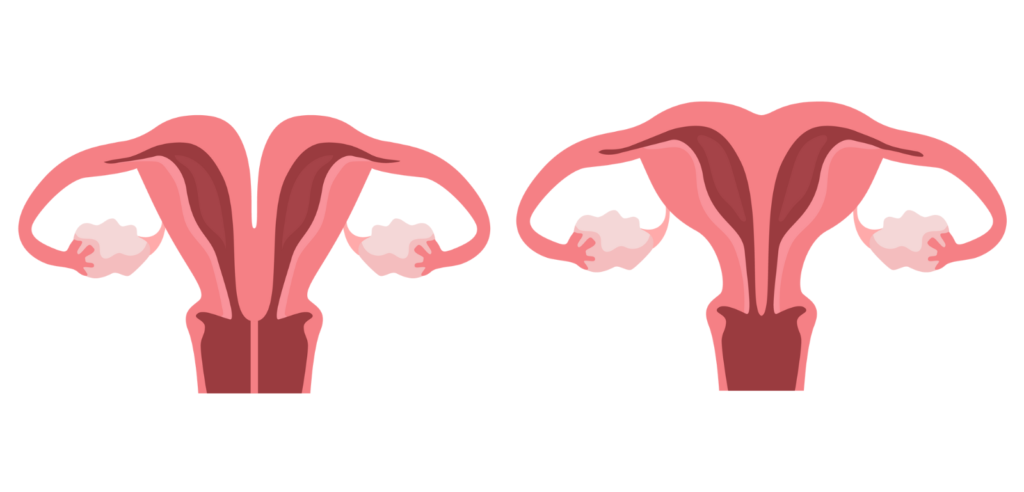
Potential symptoms include:
- Heaviness in the pelvis
- Pain in the lower back
- Increased frequency of urination
Imaging studies, such as MRI and transvaginal ultrasounds, can lead to definitive diagnoses
How Is Adenomyosis Diagnosed?
The symptoms can be attributed to fibroids or endometriosis, making diagnosis more difficult.
A physician will conduct the following:
- Pelvic exam
- Transvaginal ultrasound
- MRI (considered the gold standard for diagnosis)
- Blood work to check for anaemia
Patients with MRI data indicating junctional zone thickness >12 mm have a higher probability of having adenomyosis.
Adenomyosis Treatment: Medical and Surgical Options
There is a variety of options to address adenomyosis, as there is no universally effective treatment. Each treatment depends on the patient’s age, general health, and symptom severity, as well as their fertility considerations.
1. Medical Management
The objective of surgical alternatives is to lessen bleeding and pain:
- Hormonal IUDs
- Medications for pain relief
- Contraceptives that contain hormones
- Progesterone therapy
These options do not eliminate the condition, but aim to improve quality of life.
2. Advanced Non-Surgical Treatment Options
- GnRH agonists (provide temporary relief of symptoms)
- Uterine artery embolization (UAE) in certain cases
These methods are intended to decrease inflammation and blood flow to the uterus.
3. Surgical Treatment
- Hysterectomy is the only definitive therapy for adenomyosis
- Recommended for women with moderate to severe symptoms who desire to no longer bear children.
This option is only considered after the conservative approaches have been exhausted.
Managing Adenomyosis: Realistic Expectations
Women often misrepresent the search term how I cured my adenomyosis. It demonstrates a lack of understanding of the adenomyosis situation that has chronic conditions. You should not expect to find a solution without a surgical intervention.
That said, there are women who manage to control the condition by:
- Using hormonal therapy
- Making lifestyle modifications
- Adopting stress management techniques
- Receiving targeted medical care
With a proper management plan, symptom control and life quality improvement are attainable.
Impacts of Adenomyosis on Fertility
Adenomyosis impacts the ability to have children in several significant ways:
- Changes to how the uterus contracts
- Complications with how an embryo implants in the uterus
- Increased likelihood of miscarriage
Despite these challenges, adenomyosis are often able to conceive, whether on their own or with assistance. Early identification of the condition is key to ensuring the woman is able to retain the ability to achieve pregnancy.
Read Also: Types of Uterine Fibroids: Causes, Symptoms & Treatment
Comparison between Adenomyosis, Endometriosis, Fibroids
| Feature | Adenomyosis | Endometriosis | Fibroids |
| Definition | A condition where endometrial tissue grows into the muscular wall of the uterus (myometrium). | A condition where endometrial-like tissue grows outside the uterus (ovaries, fallopian tubes, pelvis). | Non-cancerous growths (tumors) that develop in or on the uterus. |
| Nature of Condition | Diffuse growth within uterine muscle | Ectopic (outside uterus) tissue growth | Solid benign tumors |
| Common Age Group | Mostly women aged 35–50 years | Usually women aged 25–40 years | Common in women aged 30–50 years |
| Main Symptoms | Heavy menstrual bleeding, painful periods, enlarged uterus | Severe pelvic pain, painful periods, infertility, pain during intercourse | Heavy bleeding, pelvic pressure, frequent urination, abdominal swelling |
| Menstrual Pain | Moderate to severe | Often severe | Mild to severe (varies by size/location) |
| Impact on Fertility | May affect fertility | Strongly associated with infertility | Can affect fertility depending on size/location |
| Uterus Size | Enlarged, bulky uterus | Usually normal-sized uterus | Enlarged or distorted uterus |
| Hormone Dependence | Estrogen-dependent | Estrogen-dependent | Estrogen and progesterone-dependent |
| Diagnosis | Ultrasound, MRI | Laparoscopy (gold standard), ultrasound, MRI | Ultrasound, MRI |
| Treatment Options | Hormonal therapy, pain management, surgery (hysterectomy in severe cases) | Hormonal therapy, pain management, laparoscopic surgery | Medications, hormonal therapy, minimally invasive procedures, surgery |
| Risk of Cancer | Low | Low | Very low (mostly benign) |
| Recurrence | Possible if uterus is preserved | Common recurrence | Possible recurrence |
Zeeva Fertility: Adenomyosis Expert Care
Zeeva Fertility has a specialised care model for complex uterine disorders, specifically adenomyosis. The center uses a combination of advanced imaging, hormone assessments, and individualised treatment strategies to symptomatically manage and preserve functional fertility, if possible.
Zeeva’s fertility specialists address the complexity of each case, determining the degree of the adenomyosis uterus, and customising treatment to individual reproductive aspirations. From conservative medical therapy to fertility-centric approaches, compassionate and evidence-driven care is a hallmark of Zeeva Fertility for women with an enduring need symptomatically and for complex reproductive pathways.
Adenomyosis Lifestyle Self-Management Tips
- Balanced anti-inflammatory diet
- Moderate regular exercise
- Yoga and meditation for stress management
- Track your period
- Limit smoking and caffeine
Lifestyle modifications can enhance the effectiveness of medical therapy.
Conclusion
Adenomyosis is an obstacle that millions of women around the globe face. Knowing what adenomyosis is and understanding and recognising adenomyosis symptoms can save women from years of pain and misdiagnosis. Although the most effective treatment often requires surgery, women suffering from adenomyosis can get the treatment that will help them manage their symptoms and help them keep their ability to have children.
Conditions such as an adenomyosis uterus or a bulky uterus with adenomyosis, coupled with heavy bleeding or chronic pain, should be treated with urgency. Women are able to improve their health and their lives to a greater extent with help from specialists or centers like Zeeva Fertility. Women can manage their adenomyosis if they receive the right treatment at the most opportune time and make informed decisions.
Frequently Asked Questions
Q1. Can adenomyosis go away on its own after menopause?
Ans. Yes, adenomyosis symptoms ofteQn reduce or disappear after menopause because estrogen levels decline, which slows the growth of endometrial tissue within the uterine muscle.
Q2. Is adenomyosis the same as endometriosis?
Ans. No. While both conditions involve endometrial tissue, adenomyosis occurs within the uterine muscle, whereas endometriosis affects areas outside the uterus, such as the ovaries or pelvic lining.
Q3. Can adenomyosis be detected in a routine ultrasound?
Ans. Adenomyosis can sometimes be detected through transvaginal ultrasound, but MRI is considered more accurate for confirming the diagnosis and assessing severity.
Q4. Does adenomyosis always require surgery?
Ans. No. Many women manage adenomyosis successfully with hormonal therapy, pain management, and lifestyle changes. Surgery is considered only in severe cases.
Q5. Can women with adenomyosis still get pregnant naturally?
Ans. Yes. Many women with mild to moderate adenomyosis conceive naturally, while others may require fertility support depending on symptom severity and uterine involvement.



0 Comments
Join the conversation