
Low AMH Treatment and Fertility Care at Zeeva Fertility
Low AMH does not mean pregnancy is impossible. Get a personalised fertility plan based on your age, ovarian reserve and complete fertility evaluation.
What Does Low AMH Mean?
AMH, or Anti-Müllerian Hormone, helps estimate ovarian reserve—the number of eggs remaining in the ovaries.
A low AMH level may suggest fewer available eggs, but it does not measure egg quality or mean pregnancy is impossible. Age, ultrasound findings and overall fertility health are equally important.
Who Should Seek Fertility Evaluation for Low AMH?
- Consider consulting a fertility specialist if:
- Comprehensive and accurate fertility evaluation
- Personalised treatment based on your pregnancy goals
- Evidence-based ovulation-induction protocols
- Careful ultrasound monitoring to support safety
- IUI, IVF or ICSI only when medically indicated
- Clear counselling at every stage of treatment
- Long-term guidance for reproductive and metabolic health
How Is Low AMH Evaluated?
Evaluation may include:
- Consider consulting a fertility specialist if:
- Review of your age, menstrual cycles and medical history
- AMH test interpretation
- Antral follicle count through ultrasound
- Selected hormone tests
- Fallopian-tube assessment
- Semen analysis for the male partner
- Long-term guidance for reproductive and metabolic health
Pregnancy Chances and Treatment Options With Low AMH
Treatment may focus on:
Making menstrual cycles more regular
Ovulation monitoring and timed intercourse
IUI in selected cases
IVF or ICSI when medically indicated
Egg or embryo freezing for fertility preservation
Women with low AMH may produce fewer eggs during IVF, but even a small number of good-quality eggs may result in pregnancy.
Why Choose Zeeva Fertility?
At Zeeva Fertility, we do not treat an AMH report as the final answer.Our specialists provide:
- Age-specific AMH interpretation
- Complete couple fertility evaluation
- Personalised treatment planning
- Carefully monitored ovarian stimulation
- Clear and realistic counselling
- IUI, IVF or ICSI only when required
Our goal is to help you make the best use of your reproductive time with the most appropriate treatment—not to rush you into IVF.
Low AMH may change your fertility plan, but it does not end your possibility of becoming a parent.

Meet Our Fertility Experts
The Experts Guiding Your Journey
Dr. Shweta Goswami
Dr. Aarthi Mani
Dr. Shuchi Lakhanpal Kalia

Dr. Nidhi Tripathi

Dr. Shipra Gupta

Dr. Snehal Shah Mahajan

Dr. Mayank Sharma

Dr. Avnika Kapoor

Dr. Ayushi Bhardwaj

Dr Deepika Mann

— Our Centres
Quality Fertility Care, Now Near You
Our cutting-edge fertility centres across Delhi NCR — Noida, Delhi, Ghaziabad and Greater Noida
Zeeva Fertility, Sector 63, Noida
H 1A, 37, H Block, Sector 63, Noida, Uttar Pradesh 201301
(+91) 7669381393
10 am - 6 pm

Zeeva Fertility in South Extension, Delhi
3rd Floor, M-2, South Extension II, Block M, New Delhi, Delhi 110049
(+91) 7669381393
10 am - 6 pm

Zeeva Fertility, Sector 104, Noida
Zeeva Clinic, HA 103A, First Floor, Sector 104, Noida, Uttar Pradesh 201304
(+91) 7669381393
11 am - 1 pm & 5 am - 9 pm
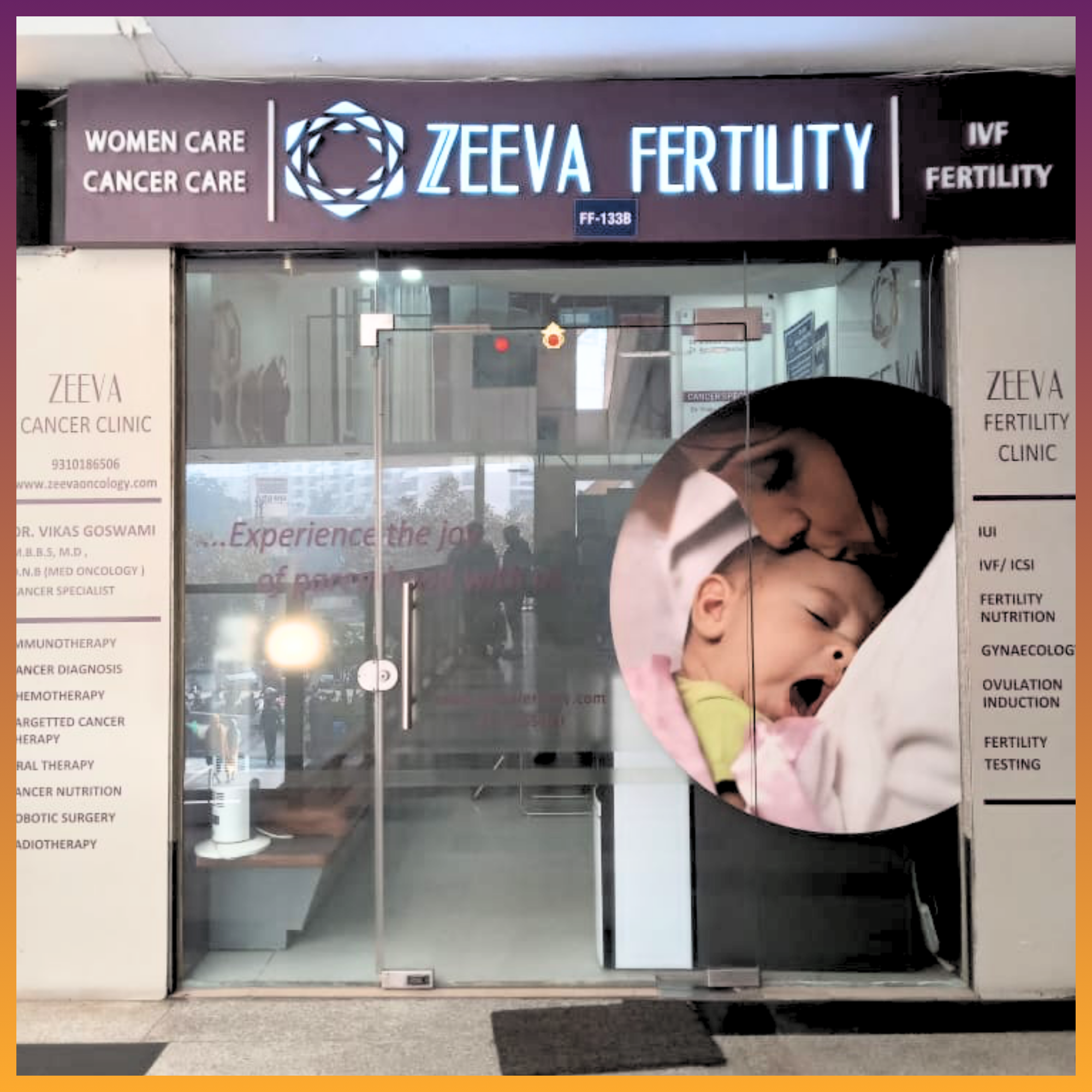
Greater Noida to Gaur City 1 Greater Noida West
Zeeva Fertility, 9th Floor, NH-3, GH 01, Gaur City 1, Sector 4, Greater Noida west, Ghaziabad, Uttar Pradesh 201009
(+91) 7669381393
10 am - 1 pm

Zeeva Fertility in RDC, Ghaziabad
District Centre, RDC, Sector 15, Sector 10, Raj Nagar, Ghaziabad, Uttar Pradesh 201002
(+91) 7669381393
2 pm - 5 pm

Zeeva Fertility in Indirapuram, Ghaziabad
GF-01, 698, Niti Khand I, Indirapuram, Ghaziabad, Uttar Pradesh 201014
(+91) 7669381393
6 pm - 8 pm
Ready to take the next step?
Talk to a Zeeva specialist — free, no pressure, clear options.
Our Blogs
Expert fertility insights
PCOS and Blocked Fallopian Tubes: Can You Conceive Without IVF?
Read More →

IUI vs IVF: How to Choose the Right Fertility Treatment in India
Read More →

Spotting Before Period: Causes and When to Worry
Read More →

IVF Success Rate कितना होता है? Age, AMH और Egg Quality का Role
Read More →


— Common questions
Fertility Questions, Answered
What does a low AMH level mean?
A low Anti-Müllerian Hormone level may indicate a reduced ovarian reserve, meaning fewer eggs may remain in the ovaries. AMH mainly helps doctors estimate how the ovaries may respond to fertility medicines.
Does low AMH mean I am infertile?
No. Low AMH does not mean that pregnancy is impossible. It should be interpreted along with your age, ovulation, ultrasound findings, fallopian-tube health and your partner’s semen parameters.
Can I get pregnant naturally with low AMH?
Yes, natural pregnancy may still be possible, especially if you are younger, ovulating regularly and have no other fertility problems. AMH alone cannot accurately predict how quickly or whether you will conceive naturally.
Does low AMH mean poor egg quality?
Not necessarily. AMH mainly provides information about egg quantity and expected ovarian response. Egg quality is influenced more strongly by age, so two women with the same AMH level may have different pregnancy chances.
What can cause low AMH?
AMH naturally decreases with age. Lower ovarian reserve may also be associated with family history of early menopause, previous ovarian surgery, chemotherapy, pelvic radiation or having only one ovary. Sometimes, no clear cause is identified.
Should I repeat my AMH test?
A repeat test may be advised if the result does not match your age, medical history or ultrasound findings. AMH levels and laboratory reference ranges can vary, so the result should always be reviewed by a fertility specialist rather than interpreted alone.
Does every woman with low AMH need IVF?
No. Depending on your age and complete fertility assessment, you may be advised to try naturally, undergo ovulation monitoring or consider IUI. IVF may be recommended when time is important, additional fertility factors are present or simpler options are unlikely to help.
Can IUI work with low AMH?
IUI may be considered when you are ovulating, at least one fallopian tube is open and the semen parameters are suitable. AMH alone does not reliably predict whether an IUI cycle will succeed, so the decision must be personalised.
Can IVF be successful with low AMH?
Yes, IVF can still be successful, but women with low AMH may produce fewer eggs during stimulation. Pregnancy chances depend on age, egg and embryo quality, sperm health and other clinical factors—not simply the number of eggs collected. A very low AMH result should not automatically exclude someone from treatment.
When should I consult a fertility specialist?
Seek specialist advice if your AMH is low for your age, you are 35 or older, you have had ovarian surgery or cancer treatment, or you are trying to conceive without success. Early evaluation can help you understand your options and avoid unnecessary delays.
At Zeeva Fertility, AMH is assessed alongside your age, antral follicle count and complete couple evaluation to create a personalised fertility plan.