
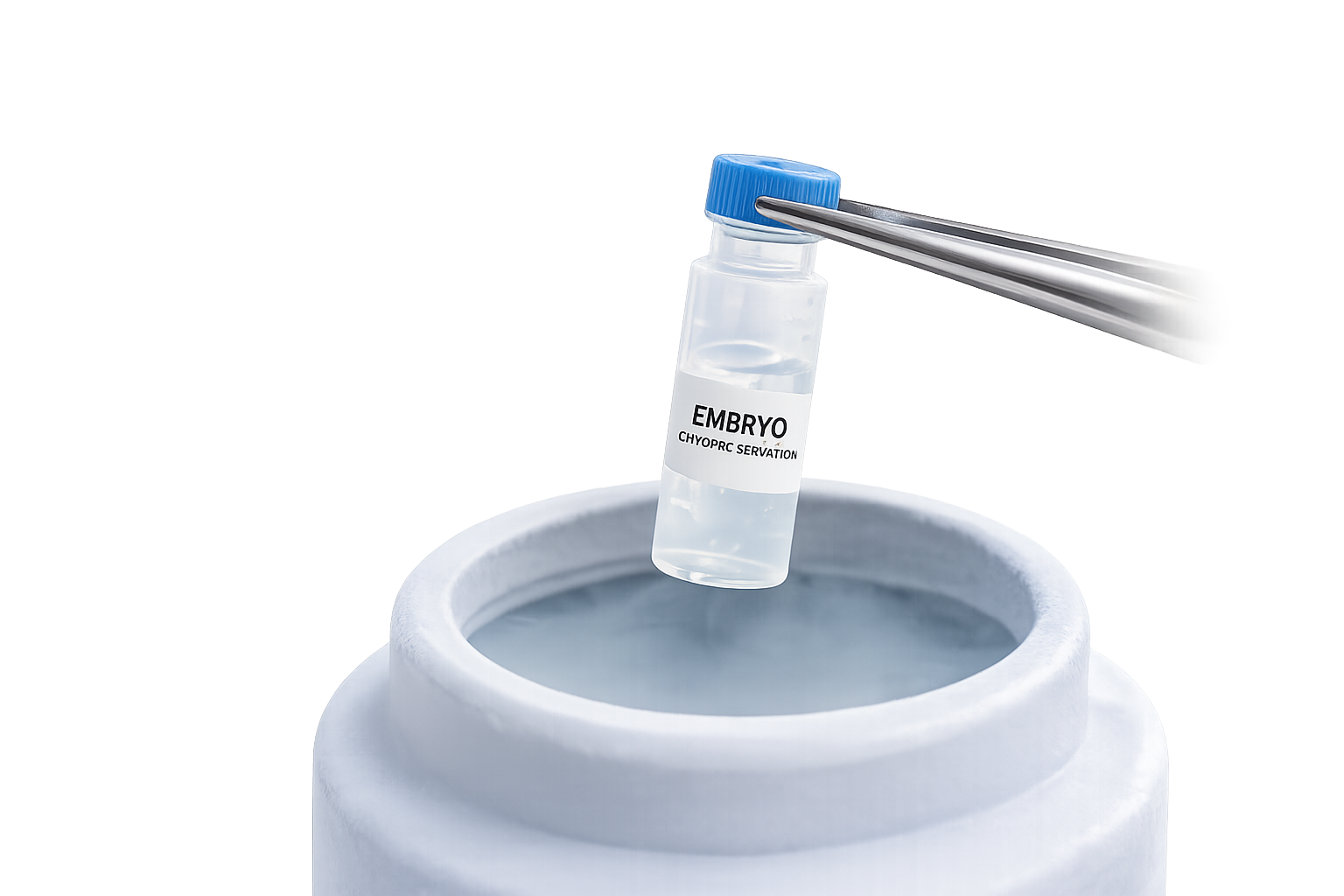



Embrace the joy of parenting with Embryo Cryopreservation Center In Noida.
We use state-of-the-art cryopreservation technology for your embryos, so you can be confident they will be well-preserved for future use. We also have a team of experienced professionals who are dedicated to providing the best possible care for your embryos.
Embrace the joy of parenting with Embryo Cryopreservation Center In Noida
We use state-of-the-art cryopreservation technology for your embryos, so you can be confident they will be well-preserved for future use. We also have a team of experienced professionals who are dedicated to providing the best possible care for your embryos.
Every treatment decision is shaped with 20+ years of proven clinical experience
Trust
25,000+
Happy Families
Result
78%+
IVF Success Rate
Positive
1,650+
Google Reviews
Heritage
20+
Years of Experience
What Is Embryo Cryopreservation?
Embryo cryopreservation, also known as embryo freezing, is a fertility preservation technique in which suitable embryos created during IVF or ICSI are frozen and stored for future use. The embryos are preserved at very low temperatures so they can be thawed and transferred in a later treatment cycle.
Understanding how embryo freezing works, how long cryopreservation can last, and the factors that affect storage and future use can help couples make informed treatment decisions.
What Are the Types of Surgical Sperm Retrieval?
Different surgical sperm retrieval techniques are used depending on where sperm are likely to be found and the reason they are absent from the semen.
- PESA – Percutaneous Epididymal Sperm Aspiration
PESA uses a fine needle to collect sperm-containing fluid from the epididymis and is commonly considered in selected cases of obstructive azoospermia. - MESA – Microsurgical Epididymal Sperm Aspiration
MESA uses a surgical microscope to collect sperm-containing fluid directly from the epididymal tubules, usually in selected cases of obstructive azoospermia. - TESA – Testicular Sperm Aspiration
TESA uses a fine needle to collect testicular tissue or fluid, which is then examined in the laboratory to identify viable sperm. - TESE – Testicular Sperm Extraction
TESE involves removing a small sample of testicular tissue through a minor incision so the laboratory can identify sperm suitable for ICSI. - Micro-TESE – Microsurgical Testicular Sperm Extraction
Micro-TESE uses an operating microscope to identify areas more likely to contain sperm-producing tissue, particularly in selected men with non-obstructive azoospermia.
— TREATMENT PROCEDURE
Embryo Cryopreservation Procedure Step by Step
The embryo cryopreservation process usually takes place as part of an IVF or ICSI cycle. Only embryos considered suitable for freezing are selected by the embryology team.

Step 1: Embryo Development
After eggs are fertilised through IVF or ICSI, the resulting embryos are monitored in the laboratory as they develop.
Step 2: Embryo Assessment
The embryology team evaluates the embryos and identifies those that are suitable for freezing based on their development and quality.
Step 3: Preparation for Freezing
Selected embryos are placed in a special protective solution called a cryoprotectant, which helps protect their cells during the freezing process.
Step 4: Vitrification & Storage
Vitrification is one of the most commonly used modern cryopreservation techniques. It involves very rapid freezing to minimise ice crystal formation. The embryos are then stored in specialised liquid nitrogen tanks.
Step 5: Thawing & Future Embryo Transfer
When the couple is ready for treatment, the selected embryo is carefully thawed and assessed. If it remains suitable, it can be transferred into the uterus during a Frozen Embryo Transfer cycle.
What Should Couples Know
Embryo freezing can help preserve embryos for future treatment, but couples should understand the storage process, limitations, costs, and future treatment requirements before deciding.
1. Not Every Embryo May Be Suitable for Freezing
The embryology team assesses embryo development and quality before deciding which embryos can be cryopreserved.
2. How Long Can Cryopreservation Last?
Embryos can remain frozen for several years when stored under carefully controlled conditions.
3. Not Every Frozen Embryo Will Survive Thawing
Modern vitrification has improved embryo survival after freezing, but some embryos may not survive the freeze-thaw process or may not remain suitable for transfer.
4. How Much Does Cryopreservation Cost?
The cost of cryopreservation can vary depending on the freezing procedure, number of embryos being stored, duration of storage, and whether it is part of an IVF cycle. Storage charges may also apply separately.
5. Consent & Future Planning Are Important
Couples should clearly understand how their embryos will be stored, how long they want them preserved, and what will happen when they are ready to use them. Written consent is required for cryopreservation under Indian ART regulations.
Why Choose Zeeva Fertility for Embryo Cryopreservation?
Embryo cryopreservation requires careful coordination between the fertility specialist and embryology team. At Zeeva Fertility, the focus is on appropriate embryo selection, controlled freezing, secure storage, and clear guidance for future treatment.

1. Advanced Cryopreservation Techniques
Our embryology team uses modern embryo freezing techniques, including vitrification, to carefully preserve suitable embryos for future use.
2. Careful Embryo Assessment
Embryos are monitored and evaluated before freezing so that only embryos considered appropriate for cryopreservation are selected.
3. Controlled Embryo Storage
Frozen embryos are stored under carefully monitored laboratory conditions using specialised cryogenic storage systems.
4. Clear Guidance for Future Treatment
Couples receive information about embryo storage, expected costs, thawing, future Frozen Embryo Transfer, and the next steps when they are ready to continue treatment.
Meet Our Fertility Experts
The Experts Guiding Your Journey
Dr. Shweta Goswami
Dr. Aarthi Mani
Dr. Shuchi Lakhanpal Kalia

Dr. Nidhi Tripathi

Dr. Shipra Gupta

Dr. Snehal Shah Mahajan

Dr. Mayank Sharma

Dr. Avnika Kapoor

Dr. Ayushi Bhardwaj

Dr Deepika Mann

— Our Centres
Quality Fertility Care, Now Near You
Our cutting-edge fertility centres across Delhi NCR — Noida, Delhi, Ghaziabad and Greater Noida
Zeeva Fertility, Sector 63, Noida
H 1A, 37, H Block, Sector 63, Noida, Uttar Pradesh 201301
(+91) 7669381393
10 am - 6 pm

Zeeva Fertility in South Extension, Delhi
3rd Floor, M-2, South Extension II, Block M, New Delhi, Delhi 110049
(+91) 7669381393
10 am - 6 pm

Zeeva Fertility, Sector 104, Noida
Zeeva Clinic, HA 103A, First Floor, Sector 104, Noida, Uttar Pradesh 201304
(+91) 7669381393
11 am - 1 pm & 5 am - 9 pm
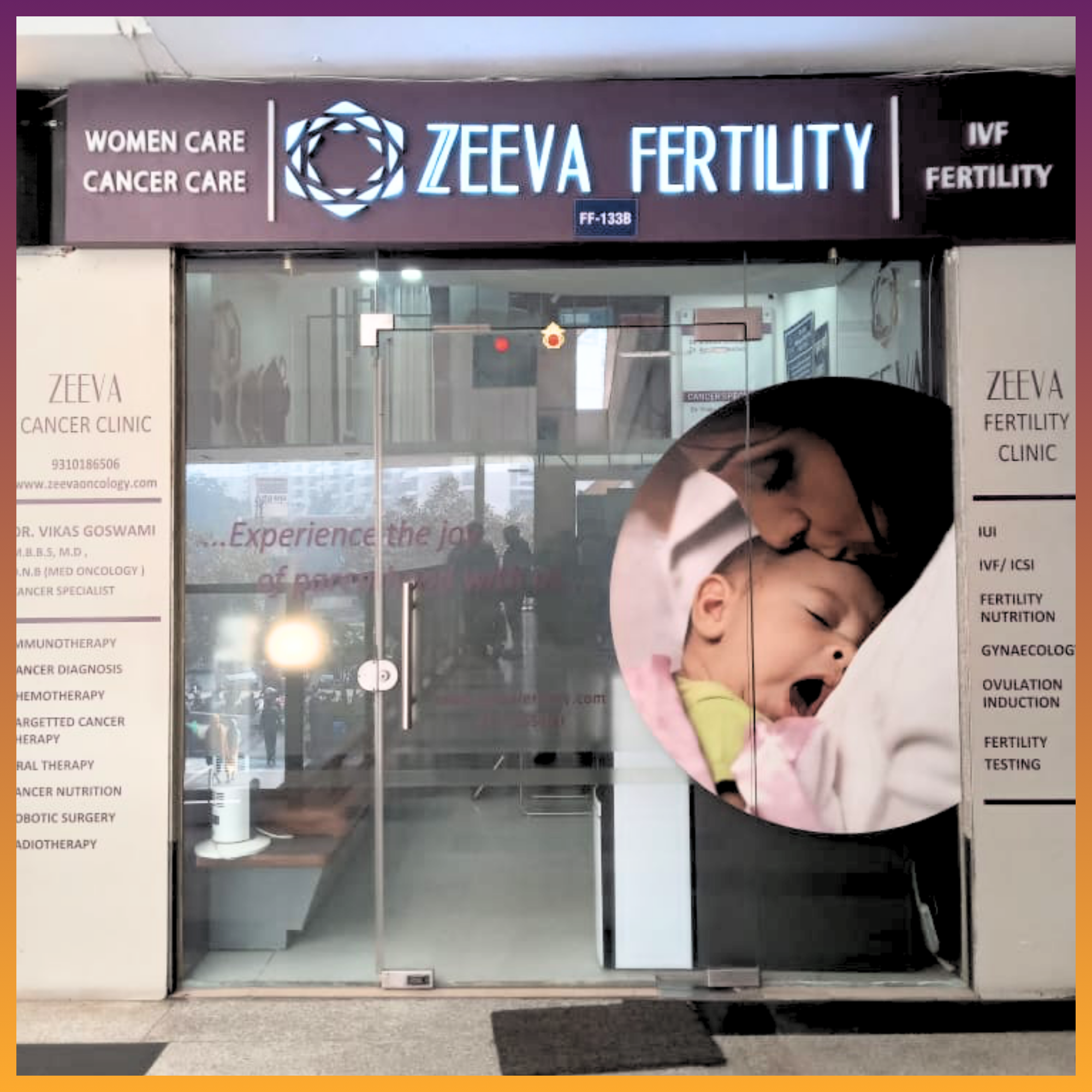
Greater Noida to Gaur City 1 Greater Noida West
Zeeva Fertility, 9th Floor, NH-3, GH 01, Gaur City 1, Sector 4, Greater Noida west, Ghaziabad, Uttar Pradesh 201009
(+91) 7669381393
10 am - 1 pm

Zeeva Fertility in RDC, Ghaziabad
District Centre, RDC, Sector 15, Sector 10, Raj Nagar, Ghaziabad, Uttar Pradesh 201002
(+91) 7669381393
2 pm - 5 pm

Zeeva Fertility in Indirapuram, Ghaziabad
GF-01, 698, Niti Khand I, Indirapuram, Ghaziabad, Uttar Pradesh 201014
(+91) 7669381393
6 pm - 8 pm
What our patients are saying
Failed IVF
Natural Pregnancy
IVF
Tubal Blockage
Low AMH
IVF
Failed IVF
Ready to take the next step?
Talk to a Zeeva specialist — free, no pressure, clear options.
Our Blogs
Expert fertility insights
PCOS and Blocked Fallopian Tubes: Can You Conceive Without IVF?
Read More →

IUI vs IVF: How to Choose the Right Fertility Treatment in India
Read More →

Spotting Before Period: Causes and When to Worry
Read More →

IVF Success Rate कितना होता है? Age, AMH और Egg Quality का Role
Read More →


— Common questions
Fertility Questions, Answered
How many embryos are needed for a successful cryopreservation?
The viability of cryopreserved embryos is determined by a combination of biological and technical factors. Regardless of the technicians’ experience level and technical skill, some attrition in the recovery of viable embryos at thaw and the number of embryos that will result in live-born offspring upon transfer should be expected.
One should estimate that 20-25% of frozen-thawed embryos will produce live offspring; therefore, we recommend preserving sufficient embryos to re-establish a given line a few times before an additional cohort of embryos would need to be cryopreserved. In general, this is between 100-300 embryos per rodent model. Zeeva has preserved 250-300 embryos per rodent model.
What are the risks of this embryo Cryopreservation procedure?
Embryo freezing poses no risk to resulting pregnancies. Researchers have shown that fewer frozen-thawed embryos are associated with lower preterm birth rates, low birth weight, growth restriction, and perinatal mortality. The main risks associated with embryo cryopreservation are Damage to embryos during the freezing process. Embryos that are not viable for freezing. Failure to get pregnant after embryos are thawed and implanted. Increased rates of medical issues in pregnancy like preeclampsia and placenta accrete spectrum. Multiple births if more than one embryo is implanted
What if one of us changes our mind about using or donating embryos?
Before using an embryo in treatment or research, you, your partner, or the donor(s) (if applicable) can withdraw consent at any time before the embryos are used. If consent is withdrawn before one year of storage, stored embryos will be removed from storage and allowed to perish. If consent is withdrawn after one year, embryos that were intended for use in treatment cannot be used.
What is the success rate of a good embryo transfer?
The embryo can be transferred at day 3 or blastocyst stages (Day 5 or Day 6). According to the age and quality of the embryos, the success rate ranges from 80% to 30%.
Is it safe to use frozen embryos in treatment?
A major risk is having multiple children (twins or triplets), which pose serious health risks to both mother and child. When you transfer only one embryo to the womb, this process is known as elective single embryo transfer, which reduces the likelihood of having multiple births. Treatment with frozen embryos is just as safe as using fresh embryos.