



Embrace the joy of parenting with surgical sperm retrieval treatment In Noida.
Zeeva is a Surgical Sperm Retrieval Treatment Center in Noida. We offer various services, including sperm retrieval and other fertility treatments. We are dedicated to helping our patients achieve their dream of starting a family. We also offer a wide range of support services, including counseling and financial planning. We are committed to providing our patients with the highest quality of care.
Every treatment decision is shaped with 20+ years of proven clinical experience
Trust
25,000+
Happy Families
Result
78%+
IVF Success Rate
Positive
1,650+
Google Reviews
Heritage
20+
Years of Experience
What Is Surgical Sperm Retrieval?
Surgical sperm retrieval is a fertility procedure used to collect sperm directly from the epididymis or testicles when usable sperm cannot be obtained through ejaculation. It may be recommended in cases of azoospermia, where no sperm is found in the semen, or when a blockage, previous surgery, vasectomy, ejaculation difficulty, or reduced sperm production prevents sperm from being available naturally.
When couples consider sperm extraction for IVF, it is important to understand that surgical sperm retrieval helps obtain sperm for fertility treatment. It does not itself treat the underlying cause of male infertility.
What Are the Types of Surgical Sperm Retrieval?
Different surgical sperm retrieval techniques are used depending on where sperm are likely to be found and the reason they are absent from the semen.
- PESA – Percutaneous Epididymal Sperm Aspiration
PESA uses a fine needle to collect sperm-containing fluid from the epididymis and is commonly considered in selected cases of obstructive azoospermia. - MESA – Microsurgical Epididymal Sperm Aspiration
MESA uses a surgical microscope to collect sperm-containing fluid directly from the epididymal tubules, usually in selected cases of obstructive azoospermia. - TESA – Testicular Sperm Aspiration
TESA uses a fine needle to collect testicular tissue or fluid, which is then examined in the laboratory to identify viable sperm. - TESE – Testicular Sperm Extraction
TESE involves removing a small sample of testicular tissue through a minor incision so the laboratory can identify sperm suitable for ICSI. - Micro-TESE – Microsurgical Testicular Sperm Extraction
Micro-TESE uses an operating microscope to identify areas more likely to contain sperm-producing tissue, particularly in selected men with non-obstructive azoospermia.
— TREATMENT PROCEDURE
Surgical Sperm Retrieval Procedure Step by Step
The surgical sperm retrieval procedure depends on whether sperm are absent due to a blockage or reduced sperm production. The specialist reviews semen analysis, medical history, hormone levels, and other relevant findings to choose the most suitable retrieval technique.

Step 1. Male Fertility Evaluation
The assessment identifies why sperm is absent, helping distinguish obstructive azoospermia, where sperm flow is blocked, from non-obstructive azoospermia, where sperm production is reduced.
Step 2. Selection of the Sperm Retrieval Technique
Based on the diagnosis, the doctor chooses the most suitable method, such as PESA, MESA, TESA, TESE or Micro-TESE, depending on where sperm are expected to be found.
Step 3. Anaesthesia & Sperm Retrieval
Under appropriate anaesthesia, sperm-containing fluid or a small tissue sample is collected using a needle, small surgical opening or microsurgical technique, depending on the selected procedure.
Step 4. Laboratory Assessment of the Retrieved Sample
The retrieved fluid or tissue is examined in the laboratory, where the embryology team identifies and prepares viable sperm that may be suitable for fertility treatment.
Step 5. ICSI or Sperm Freezing
If suitable sperm are found, they may be used for ICSI or, when enough viable sperm are available, frozen for possible use in a future treatment cycle.
What Couples Should Know
Surgical sperm retrieval may help obtain sperm when none is available through ejaculation. Outcomes depend on the cause, technique used, sperm availability and the couple’s overall fertility factors.
1. Surgical Sperm Retrieval Success Rates Vary
Surgical sperm retrieval success rates depend on the cause of azoospermia, testicular function and retrieval technique. Finding sperm does not guarantee pregnancy.
2. How Painful Is Sperm Retrieval?
How painful is sperm retrieval? Anaesthesia helps control discomfort during the procedure. Mild pain, swelling, tenderness or bruising may occur during recovery.
3. Surgical Retrieval Is Usually Followed by ICSI
Retrieved sperm are commonly used with ICSI, where an embryologist injects a selected sperm directly into a mature egg to assist fertilisation.
4. Sperm May Not Be Retrieved in Every Case
Sperm retrieval is not always successful, especially when sperm production is severely reduced. Couples should understand this possibility before the procedure.
5. Retrieved Sperm May Be Frozen
If enough viable sperm are found, they may be frozen for future IVF or ICSI treatment, potentially reducing the need for another retrieval procedure.
Why Choose Zeeva Fertility for Surgical Sperm Retrieval?
At Zeeva Fertility, surgical sperm retrieval is planned as part of the couple’s complete fertility treatment, with careful diagnosis, technique selection and embryology support.

1. Technique Based on the Diagnosis
PESA, TESA, TESE or Micro-TESE is selected according to the cause of male infertility and the individual fertility assessment.
2. Clinical & Embryology Coordination
Fertility specialists and embryologists coordinate sperm retrieval, laboratory assessment and preparation of suitable sperm for ICSI or cryopreservation.
3. Both Partners Are Evaluated Together
Male fertility findings are considered alongside female age, ovarian reserve, egg quality and previous treatment history while planning IVF or ICSI.
4. Clear Guidance at Every Step
Couples are informed about the recommended retrieval method, expected outcomes, use of retrieved sperm and possible next steps if sperm are not found.
Meet Our Fertility Experts
The Experts Guiding Your Journey
Dr. Shweta Goswami
Dr. Aarthi Mani
Dr. Shuchi Lakhanpal Kalia

Dr. Nidhi Tripathi

Dr. Shipra Gupta

Dr. Snehal Shah Mahajan

Dr. Mayank Sharma

Dr. Avnika Kapoor

Dr. Ayushi Bhardwaj

Dr Deepika Mann

— Our Centres
Quality Fertility Care, Now Near You
Our cutting-edge fertility centres across Delhi NCR — Noida, Delhi, Ghaziabad and Greater Noida
Zeeva Fertility, Sector 63, Noida
H 1A, 37, H Block, Sector 63, Noida, Uttar Pradesh 201301
(+91) 7669381393
10 am - 6 pm

Zeeva Fertility in South Extension, Delhi
3rd Floor, M-2, South Extension II, Block M, New Delhi, Delhi 110049
(+91) 7669381393
10 am - 6 pm

Zeeva Fertility, Sector 104, Noida
Zeeva Clinic, HA 103A, First Floor, Sector 104, Noida, Uttar Pradesh 201304
(+91) 7669381393
11 am - 1 pm & 5 am - 9 pm
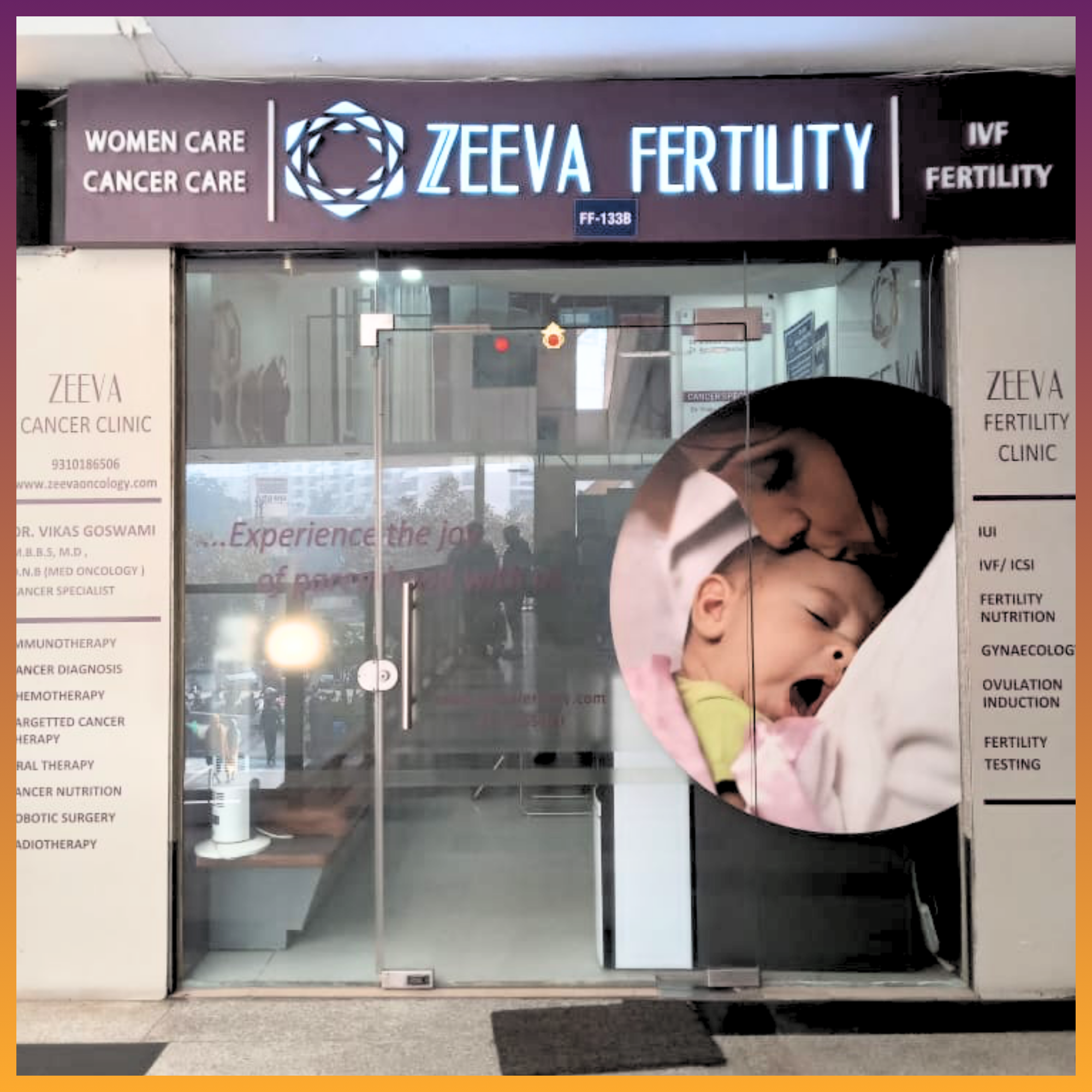
Greater Noida to Gaur City 1 Greater Noida West
Zeeva Fertility, 9th Floor, NH-3, GH 01, Gaur City 1, Sector 4, Greater Noida west, Ghaziabad, Uttar Pradesh 201009
(+91) 7669381393
10 am - 1 pm
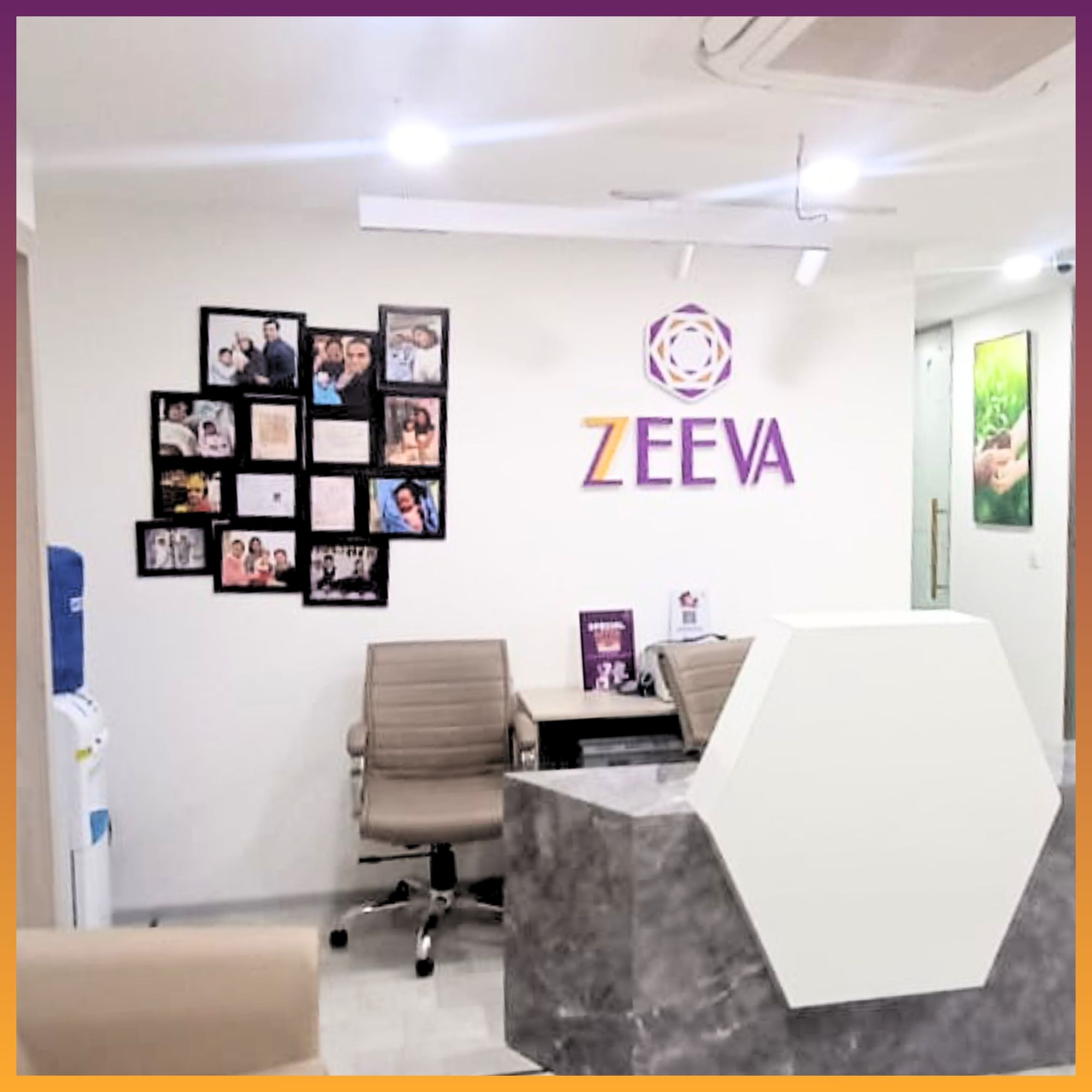
Zeeva Fertility in RDC, Ghaziabad
District Centre, RDC, Sector 15, Sector 10, Raj Nagar, Ghaziabad, Uttar Pradesh 201002
(+91) 7669381393
2 pm - 5 pm

Zeeva Fertility in Indirapuram, Ghaziabad
GF-01, 698, Niti Khand I, Indirapuram, Ghaziabad, Uttar Pradesh 201014
(+91) 7669381393
6 pm - 8 pm
What our patients are saying
Failed IVF
Natural Pregnancy
IVF
Tubal Blockage
Low AMH
IVF
Failed IVF
Ready to take the next step?
Talk to a Zeeva specialist — free, no pressure, clear options.
Our Blogs
Expert fertility insights
PCOS and Blocked Fallopian Tubes: Can You Conceive Without IVF?
Read More →

IUI vs IVF: How to Choose the Right Fertility Treatment in India
Read More →

Spotting Before Period: Causes and When to Worry
Read More →

IVF Success Rate कितना होता है? Age, AMH और Egg Quality का Role
Read More →


— Common questions
Fertility Questions, Answered
How long will it take to retrieve sperm surgically?
The procedure takes about 20-30 minutes. If the aspirates fail to show viable sperm, the surgeon will proceed to the other options (TESE), usually on another day.
What can I do if it doesn’t work?
If you’ve had surgical sperm retrieval and it hasn’t been successful, you may want to consider other options for having a family, such as using donor sperm in treatment or adopting.
Which surgical sperm retrieval treatment procedure is recommended?
There are numerous ways to harvest sperm from a man with average sperm production and a blockage. TESA procedure is the simplest and most cost-effective in the aspiration of sperm.
What should I expect if it is my first time visiting the clinic?
Initially, you’ll probably just be asked to answer a few questions, and your genitals may be examined. If necessary, you may be asked later to have some blood tests or produce a sperm sample (if possible).
Do these methods of collecting sperm carry any risks?
Surgical sperm retrieval is a low-risk procedure, but as with all operations, there can be complications, including bleeding, infection, and hematoma (blood clot) in the testicle. There is also a minimal risk of testicular damage and chronic testicular pain.