



Embrace the joy of parenting with our blastocyst transfer center in Noida.
Our Blastocyst transfer center in Noida offers various various services, including providing all the facilities and expertise required to diagnose, treat and care for patients.
Every treatment decision is shaped with 20+ years of proven clinical experience
Trust
25,000+
Happy Families
Result
78%+
IVF Success Rate
Positive
1,650+
Google Reviews
Heritage
20+
Years of Experience
What Is Blastocyst and Embryo Transfer?
A blastocyst is an embryo that has continued developing in the laboratory for around five to six days after fertilisation. During blastocyst culture, the embryology team monitors embryos for several days to observe their development before deciding which embryo may be suitable for transfer.A blastocyst transfer, also known as a Day 5 embryo transfer, involves placing a selected blastocyst into the uterus as part of an IVF or ICSI treatment cycle. Extended embryo culture can provide additional information about embryo development, but it does not mean that Day 5 transfer is automatically the right option for every patient.
How Blastocyst and Embryo Transfer Works
After fertilisation, embryos are carefully cultured and monitored in the laboratory. Their development helps the fertility and embryology teams decide the appropriate timing and approach for embryo transfer in IVF.
- Fertilisation Takes Place
After egg retrieval, suitable mature eggs are fertilised using conventional IVF or ICSI, depending on the couple’s fertility diagnosis. Once fertilisation occurs, the resulting embryos are prepared for further embryo culture and monitoring. - Embryos Begin to Develop
The fertilised eggs are kept under carefully controlled laboratory conditions as they begin dividing into multiple cells. During these early days, embryologists observe whether the embryos are progressing through the expected stages of development. - Embryo Development Is Monitored
Embryologists regularly assess how each embryo is developing during the culture period. This helps identify which embryos continue to progress and provides useful information when planning the timing of the embryo transfer. - Day 3 or Day 5 Transfer Is Planned
Depending on the number and development of embryos, transfer may be considered at an earlier stage, or embryos may continue growing until Day 5 or 6. Those reaching this stage are called blastocysts, leading to a Day 5 blastocyst transfer in suitable cases.
- A Suitable Embryo or Blastocyst Is Selected
The decision for Day 3 vs Day 5 embryo transfer is personalised rather than based on one standard rule. Embryo development, number of available embryos, the woman’s age, previous IVF history, and overall treatment plan are considered.
- The Embryo Is Transferred Into the Uterus
During the blastocyst transfer process, a selected embryo or blastocyst is gently placed inside the uterus using a thin catheter. If the embryo and uterine environment are suitable, implantation may occur over the following days.
— TREATMENT PROCEDURE
Blastocyst Transfer Process Step by Step
The blastocyst transfer process takes place within an IVF or ICSI cycle. From fertilisation to embryo transfer, each stage is carefully monitored by the fertility and embryology teams.

Step 1. Fertilisation of Retrieved Eggs
After egg retrieval, suitable mature eggs are fertilised using conventional IVF or ICSI according to the couple's fertility diagnosis and treatment plan.
Step 2. Embryo Culture and Monitoring
Following fertilisation, the embryos are placed in controlled laboratory conditions while embryologists regularly assess their development through the early stages of cell division.
Step 3. Development to the Blastocyst Stage
Embryos that continue developing may reach the blastocyst stage around Day 5 or Day 6, although the number reaching this stage differs between treatment cycles.
Step 4. Blastocyst Assessment and Transfer Planning
The embryology team evaluates the developing blastocysts, while the fertility specialist considers embryo development and patient-specific factors when planning the appropriate transfer.
Step 5. Embryo Transfer and Pregnancy Test
A selected blastocyst is gently transferred into the uterus. After the advised waiting period, a blood pregnancy test is performed to check whether implantation has occurred.
What Should Couples Know
Understanding the procedure is important, but couples should also know that blastocyst transfer success depends on much more than whether an embryo reaches Day 5.
1. Not Every Fertilised Egg Becomes a Blastocyst
Some embryos may stop developing before Day 5 or 6. The number of blastocysts available can therefore be different from the number of eggs originally retrieved.
2. Blastocyst Transfer Is Not Suitable for Every IVF Cycle
If only a small number of embryos are available, your fertility specialist and embryologist may discuss whether extended culture or an earlier embryo transfer is more appropriate.
3. Blastocyst Transfer Success Rate Depends on Multiple Factors
The blastocyst transfer success rate can be influenced by age, embryo development, egg and sperm factors, uterine health, endometrial preparation, and previous fertility history.
4. The Number of Embryos Transferred Matters
Depending on age, embryo quality, and individual circumstances, your doctor may discuss transferring a single embryo to reduce the risks associated with multiple pregnancy.
5. Suitable Remaining Embryos May Be Frozen
Good-quality blastocysts that are not transferred in the current cycle may be cryopreserved for potential use in a future frozen embryo transfer cycle.
Why Choose Zeeva Fertility for Blastocyst & Embryo Transfer?
Successful embryo transfer in IVF depends on both clinical treatment planning and careful laboratory management. At Zeeva Fertility, decisions around blastocyst culture and transfer are personalised according to each patient's treatment cycle.

1. Careful Embryo Monitoring
Embryos are monitored throughout the culture period, so their development can be assessed before decisions regarding blastocyst culture, freezing or embryo transfer are made.
2. Embryology and Laboratory Support
Blastocyst culture requires carefully controlled laboratory conditions and experienced embryology support because several important stages of early embryo development take place outside the body.
3. Personalised Embryo Transfer Planning
The transfer strategy is planned according to age, embryo development, number of available embryos, previous IVF history and other clinical factors rather than following one standard approach.
4. Clear Guidance at Every Stage
Couples are kept informed about embryo development, expected transfer timing, available embryos, freezing options and the next steps throughout their IVF treatment journey.
Meet Our Fertility Experts
The Experts Guiding Your Journey
Dr. Shweta Goswami
Dr. Aarthi Mani
Dr. Shuchi Lakhanpal Kalia

Dr. Nidhi Tripathi

Dr. Shipra Gupta

Dr. Snehal Shah Mahajan

Dr. Mayank Sharma

Dr. Avnika Kapoor

Dr. Ayushi Bhardwaj

Dr Deepika Mann

— Our Centres
Quality Fertility Care, Now Near You
Our cutting-edge fertility centres across Delhi NCR — Noida, Delhi, Ghaziabad and Greater Noida
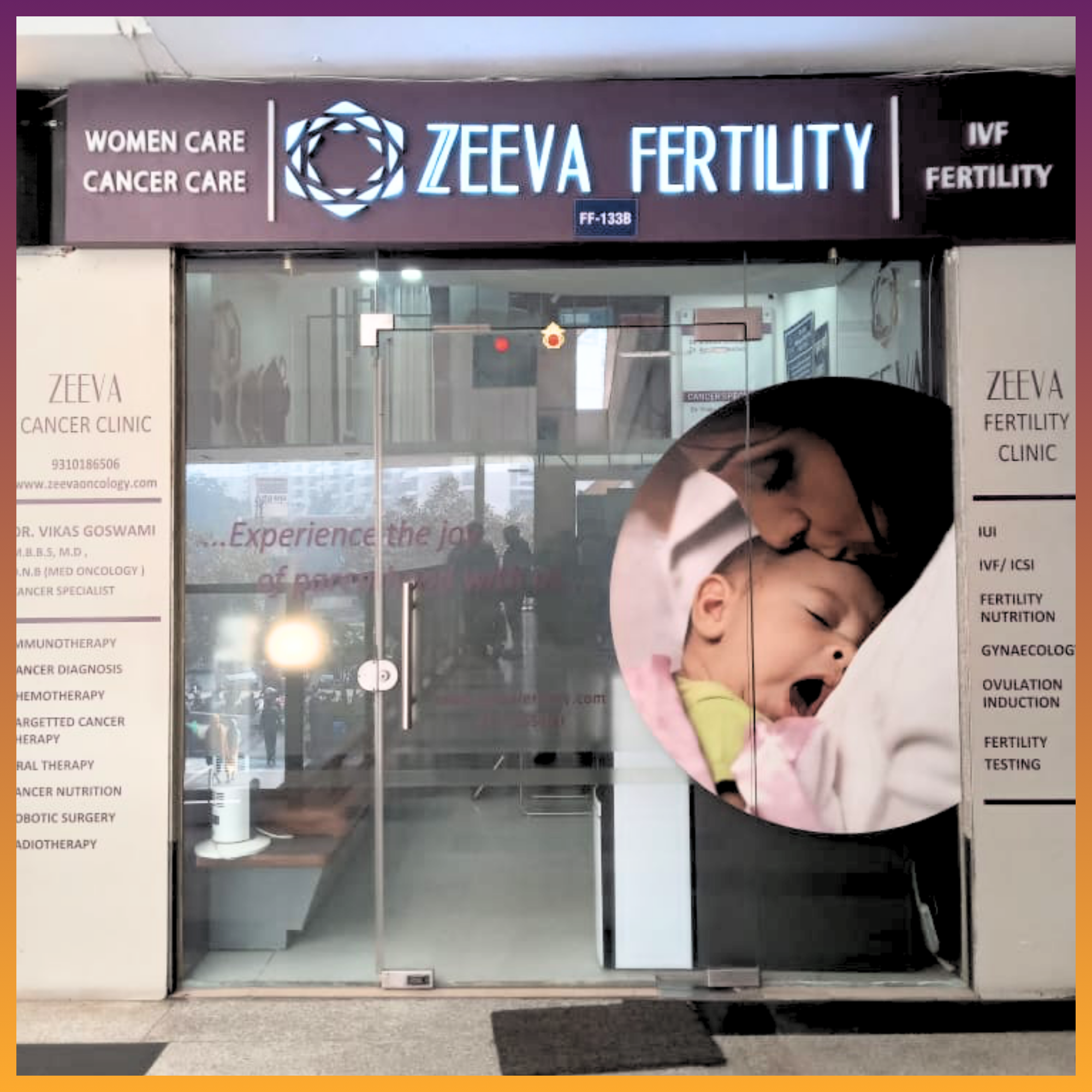
Zeeva Fertility, Sector 63, Noida
H 1A, 37, H Block, Sector 63, Noida, Uttar Pradesh 201301
(+91) 7669381393
10 am - 6 pm

Zeeva Fertility in South Extension, Delhi
3rd Floor, M-2, South Extension II, Block M, New Delhi, Delhi 110049
(+91) 7669381393
10 am - 6 pm

Zeeva Fertility, Sector 104, Noida
Zeeva Clinic, HA 103A, First Floor, Sector 104, Noida, Uttar Pradesh 201304
(+91) 7669381393
11 am - 1 pm & 5 am - 9 pm
Greater Noida to Gaur City 1 Greater Noida West
Zeeva Fertility, 9th Floor, NH-3, GH 01, Gaur City 1, Sector 4, Greater Noida west, Ghaziabad, Uttar Pradesh 201009
(+91) 7669381393
10 am - 1 pm

Zeeva Fertility in RDC, Ghaziabad
District Centre, RDC, Sector 15, Sector 10, Raj Nagar, Ghaziabad, Uttar Pradesh 201002
(+91) 7669381393
2 pm - 5 pm

Zeeva Fertility in Indirapuram, Ghaziabad
GF-01, 698, Niti Khand I, Indirapuram, Ghaziabad, Uttar Pradesh 201014
(+91) 7669381393
6 pm - 8 pm
What our patients are saying
Failed IVF
Natural Pregnancy
IVF
Tubal Blockage
Low AMH
IVF
Failed IVF
Ready to take the next step?
Talk to a Zeeva specialist — free, no pressure, clear options.
Our Blogs
Expert fertility insights
PCOS and Blocked Fallopian Tubes: Can You Conceive Without IVF?
Read More →

IUI vs IVF: How to Choose the Right Fertility Treatment in India
Read More →

Spotting Before Period: Causes and When to Worry
Read More →

IVF Success Rate कितना होता है? Age, AMH और Egg Quality का Role
Read More →


— Common questions
Fertility Questions, Answered
What is the success rate of Blastocyst embryo Transfers?
The success rate of a IVF Treatment blastocyst transfer is 40-50%. Successful pregnancy can be achieved with fewer embryos and a reduced incidence of multiple births.
Does a hatched Blastocyst implant faster?
Extending the culture of enlarged blastocysts for a few hours to allow for the transfer of spontaneously hatching/hatched blastocysts increases the implantation and pregnancy rates without increasing the danger of multiple gestations.
Does Blastocyst implantation reduce the risk of multiple births?
Yes, blastocyst reduces the chances of multiple births as only embryos that appear to have the greatest opportunity for a successful implant are chosen. This means that only 1 or 2 blastocyst embryos are transferred, with pregnancy rates of greater than 50% in patients who develop healthy blastocysts. Hence, eliminating the risk of high-order multiple pregnancies, such as triplets or quadruplets.
04 How Blastocyst Culturing help couples achieve pregnancy?
Blastocysts or advanced embryos have a higher chance of a successful pregnancy as the most healthier eggs are selected by the embryologists for a transfer in the uterus. Blastocyst implantation improves the rate of pregnancy and drops the chances of multiple pregnancy.
Who is blastocyst embryo transfer recommended for?
Couples who have had unsuccessful attempts with IVF or IVF-ICSI despite having many good-quality eggs retrieved are being offered blastocyst culture as an alternative treatment. Couples with multiple good-quality embryos on day 3 are also strong candidates for blastocyst transfer. The ability to select the most viable embryos for transfer and implantation should improve these couples’ chance of achieving a pregnancy.