
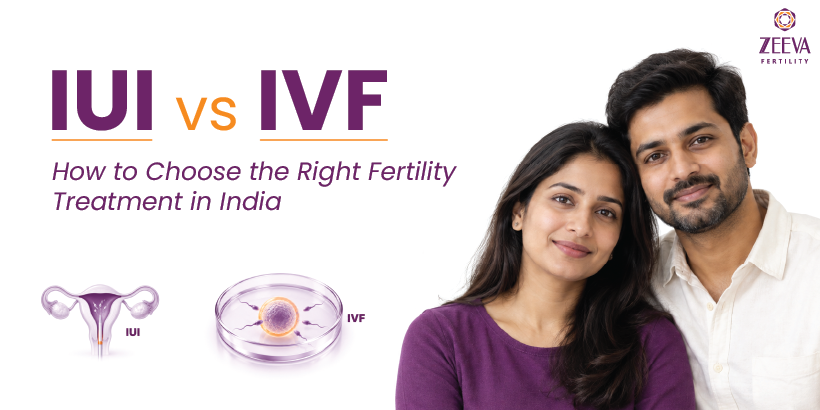
Infertility treatments IUI (Intrauterine Insemination) and IVF (In Vitro Fertilization) help Indian couples achieve pregnancy. IUI is non-surgical, simpler, and cheaper, making it ideal for mild infertility and unexplained situations, with a success rate of 10–20% per cycle. For more complicated cases, like blocked tubes or low sperm counts, IVF has the higher success rates (40–70% per cycle with cumulative pregnancy rates of 80-85% per egg retrieval in young patients) as it entails external fertilization. IUI is less invasive and IVF provides more control, more balanced results, and in a more predictable time frame. Age, fertility status, emotional preparedness, and finances should also guide a fertility expert.
- Introduction
- Understanding IUI and IVF
- IUI and IVF: What’s the Difference?
- Which Is More Painful: IUI or IVF?
- IUI & IVF Price in India
- IUI & IVF Success Rates
- When to Try IUI Before IVF
- When IVF Is the Better Option
- Emotional and Physical Preparation
- How to Decide Between IUI and IVF in India
- Conclusion
- Frequently Asked Questions
Introduction
Amidst stressful and fast-paced lifestyles, delayed marriages, and certain medical conditions like PCOS and low sperm count, more and more Indian couples are experiencing problems with their fertility. However, with the medical advancements, IUI and IVF treatments have made it possible for most couples to realize their dream of having kids. With so many people asking What is the difference between IUI and IVF? It is important to address which option is more suitable for a given situation.
This guide is designed to explain the difference between IUI and IVF, highlight IUI & IVF success rates, elaborate on the procedures, costs, and answer the most common query, which is more painful, IUI or IVF?
Understanding IUI and IVF
What is IUI (Intrauterine Insemination)?
IUI is a form of fertility treatment in which sperm is placed in a woman’s uterus directly around the time of ovulation. This rapidly improves the number of sperm reaching the fallopian tube, thus, increasing the chances of natural fertilization. IUI treatment is the most straightforward and least invasive treatment option. It is also the least expensive form of assisted reproductive technology and is the most commonly recommended option for couples facing low or mild infertility issues.
Ideal for:
- Cases of unexplained infertility
- Situations of mild male factor infertility (lower sperm count or motility)
- Issues with cervical mucus
- Disorders related to ovulation (specifically with the use of ovulation medications)
Also Read: Everything You Need To Know About IUI Treatment
What is In Vitro Fertilization (IVF)?

IVF is a more sophisticated technique that includes the retrieval of a woman’s eggs, which are then fertilized with sperm in a lab setting. The fertilized eggs, now embryos, are placed back in the woman’s uterus to encourage implantation.
Ideal for:
- Those with blocked or damaged fallopian tubes
- Severe male infertility cases
- Endometriosis
- Failed cycles of IUI (Artificial Insemination)
- Women of advanced age (35+)
While both of these treatments offer the opportunity to become pregnant, the decision of IUI vs. IVF is determined by the patient’s age, medical history, infertility cause, and financial resources.
IUI and IVF: What’s the Difference?
Understanding the IUI IVF difference is critical for selecting the appropriate treatment.
| Aspect | IUI | IVF |
|---|---|---|
| Procedure | Sperm placed directly into uterus | Egg and sperm fertilized outside body, then embryo transferred |
| Invasiveness | Non-surgical, simple | Surgical (egg retrieval) and lab-based |
| Medication | Minimal hormonal stimulation | Requires hormonal injections to stimulate multiple egg growth |
| Duration | 10–14 days | 4–6 weeks per cycle |
| Success Rate | 10–20% per cycle | 40–70% per cycle (depends on age and clinic) |
| Cost (India) | ₹10,000–₹25,000 per cycle | ₹1,00,000–₹2,50,000 per cycle |
| Pain Level | Mild discomfort | Moderate discomfort (egg retrieval and injections) |
| Best For | Mild infertility | Complex or severe infertility cases |
This table highlights what is the difference between IUI and IVF in terms of cost, process, and effectiveness.
Which Is More Painful: IUI or IVF?
Pain tolerance varies by person, but generally, IUI is less painful than IVF.
- IUI: Feels similar to a Pap smear, mild cramping or spotting may occur.
- IVF: Multiple hormone injection, egg retrieval, and embryo transfer all effectuate mild sedation. The bloating, mild pain, and mood swings for embryo transfer mildly discomfort and may need mild sedation.
In India, and with his advanced technology, gentle and comfortable procedures may be performed, more so with patient discomfort.
IUI & IVF Price in India
Cost greatly depends on your city, fertility clinic, and any other additional medical requirements needed. Here’s a rough breakdown.
Cost of IUI in India
- Per cycle: ₹10,000–₹25,000
- Extra medication: ₹5,000–₹10,000
- Monitoring and scans: ₹2,000–₹5,000
Cost of IVF in India
- Per cycle: ₹1,00,000–₹2,50,000
- Extra ICSI: embryo freezing, genetic testing, other procedures: ₹30,000–₹80,000
- Medications and injections: ₹50,000–₹1,00,000
Tip: Several clinics provide IUI and IVF bundles and EMI alternatives for more affordable treatment.
IUI & IVF Success Rates
Age, lifestyle, medical, egg, and sperm conditions all play a role in the success rates.
Average Success Rates
- IUI: 10–20% per cycle
- IVF: 40–70% per cycle with cumulative pregnancy rates of 80-85% per egg retrieval in young patients
How to Improve Success Rates
- Keep your BMI in a healthy range
- Adopt a fertility-oriented diet and exercise plan
- Regulate stress with yoga and meditation
- Take supplements prescribed to improve egg and sperm quality
- Do not smoke, drink, or consume high amounts of caffeine
In India, modern fertility clinics integrate ICSI, blastocyst culture, and time-lapse embryo monitoring for improving IVF success rates.
When to Try IUI Before IVF
In these situations, doctors generally suggest starting with IUI:
- Unexplained infertility (after 6–12 months of trying)
- Mild sperm abnormalities
- Regular ovulation with healthy tubes
- Budget constraints
If 3 to 4 IUI cycles are unsuccessful, it is generally recommended to proceed to IVF.
When IVF Is the Better Option
IVF works better when:
- The woman is over 35 years old
- There are blocked fallopian tubes
- The man has severe sperm issues
- There’s endometriosis or PCOS that is not responsive to medication
- Previous IUI cycles have failed
With IVF, the chances of pregnancy are higher because of the complete control over fertilization and embryo selection.
Emotional and Physical Preparation
Both IUI and IVF procedures can take a toll on a person emotionally and physically. Remember, mental and physical preparation can make a big difference.
For Women
- Adhere to your treatment plan.
- Rest properly after every procedure.
- Eat a well-balanced diet and cover your antioxidant, protein, and iron needs.
- Stay happy as your emotional state affects your hormones.
For Men
- Don’t smoke, drink, and try to avoid stress.
- Eat foods that contain zinc and folate to enhance your sperm quality.
- Sleep well, and do light exercises regularly.
How to Decide Between IUI and IVF in India
There are certain parameters basis on which you can decide between IUI and IVF in India.
- Medical Evaluation.
Meet a fertility specialist to evaluate your egg reserve, the health of the sperm, and the condition of the uterus.
- Age and Length of Fertility.
Younger couples (under 30) with mild issues can begin with IUI. IVF should be considered by older couples or those trying for more than 3 years.
- Emotional Readiness.
Both IUI and IVF take time, and getting emotionally charged is essential. It can be helpful to join fertility support groups.
- Financial Readiness.
Since IVF is more expensive, finances need to be discussed. Many clinics provide financial counseling and packages based on the success of the procedure.
- Examine Clinic Success Rates
Identify and investigate the fertility clinics that are the most highly rated in India. There are excellent IVF clinics in the larger cities. For example, Delhi, Noida and the financially progressive cities are Mumbai, Bangalore, and Chennai.
Also Read: Guide to IVF Success
Conclusion
Your choice between IUI & IVF should include your medical history and age and take into account your emotional and financial state. IUI is the simplest procedure and the most inexpensive option. It is most appropriate in cases of mild infertility. IVF, on the other hand, is more complex and far more effective on tough cases.
Couples are able to make the right choice once they understand the IUI and IVF difference. That includes the procedures and costs involved, as well as the IUI & IVF success rates. The initial procedure is IUI, but the higher success rate procedure is IVF. Both procedures are able to provide the needed assistance and support to couples wishing to have children.
In the end, the right decision should be made by a fertility specialist who is able to customize your treatment plan and bring you one step closer to your baby dream.
Frequently Asked Questions
Q1. Which one is better, IUI or IVF?
Ans. The choice between IUI (Intrauterine Insemination) and IVF (In Vitro Fertilization) depends on the couple’s fertility condition. IUI is less invasive and cost-effective, suitable for mild infertility or unexplained infertility. IVF offers higher success rates and is ideal for severe fertility issues like blocked tubes, low sperm count, or advanced maternal age. A fertility specialist determines the best treatment after evaluation.
Q2. When to switch from IUI to IVF?
Ans. Couples usually switch from IUI to IVF after 3–6 unsuccessful IUI cycles or when age and medical conditions reduce IUI’s chances. IVF is recommended for blocked fallopian tubes, severe male infertility, or poor egg quality. IVF offers higher success rates since fertilization happens in a lab, increasing the chances of pregnancy with fewer cycles.
Q3. How do I know if I should do IUI or IVF?
Ans. Choosing between IUI or IVF depends on factors like age, fertility diagnosis, egg and sperm quality, and duration of infertility. IUI is suitable for mild or unexplained infertility, while IVF is ideal for severe cases, advanced maternal age, or after failed IUIs. A fertility specialist conducts diagnostic tests to recommend the most effective option.
Q4. Should I skip IUI and go straight to IVF?
Ans. You may skip IUI and go straight to IVF if you have blocked fallopian tubes, severe endometriosis, very low sperm count, or are over 35 years old. IVF provides a higher chance of success per cycle compared to IUI. However, younger couples with mild infertility can first try IUI before moving to IVF. The best advice is given by a fertility specialist and you must contact the specialist for the best treatment.
Q5. Is it worth trying IUI before IVF?
Ans. Yes, trying IUI before IVF can be worthwhile for couples with unexplained infertility, minor ovulation issues, or mild male factor infertility. It’s less expensive, less invasive, and can result in pregnancy naturally. However, if age or fertility conditions limit success, IVF may be a more efficient and result-oriented approach for achieving conception. Contact a fertility specialist for more information.
Q6. Is IVF more painful than IUI?
Ans. IVF involves more medical steps, including hormone injections and egg retrieval, which can cause mild discomfort or bloating, but anesthesia minimizes pain. IUI is a simpler, less invasive procedure with minimal discomfort. Overall, both treatments are well-tolerated, and any pain experienced during IVF is temporary and manageable with proper medical care.



1 Comment
Join the conversation